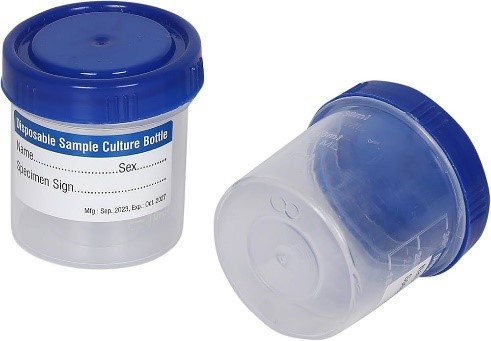
URINE CONTAINERS
Types of Urine Containers
| Container Type |
Sterility |
Primary Use |
|
| Standard Specimen Cup |
Non-Sterile |
Routine urinalysis, drug testing |
|
| Sterile Specimen Cup |
Sterile |
Bacterial cultures, sensitive tests |
|
| 24-Hour Collection Jug |
Non-Sterile* |
Kidney function, hormone studies |
|
| Pediatric Urine Bag |
Sterile |
Infant sample collectio |
|
|
Description
Urine containers are typically manufactured from medical-grade polypropylene (PP), a lightweight, durable, and chemically resistant plastic. They are designed for single-use only to eliminate the risk of cross-contamination.
- Sterile vs. Non-Sterile: Sterile containers undergo sterilization processes (such as Gamma or Ethylene Oxide) and are individually sealed. They are mandatory for microbiological cultures where even minor contamination could lead to false-positive infection results. Non-sterile containers are suitable for routine chemical urinalysis (like dipstick tests for glucose or protein) where absolute sterility is not required.
- Purpose: These containers ensure that the sample remains stable between collection and laboratory analysis, protecting both the integrity of the specimen and the safety of the laboratory personnel handling it.
Key Features
- Leak-Proof Seals:.
- Graduated Markings:
- Wide-Mouth Design:
- Labeling Area:
- Chemical Stability:.